Payments

Payments

In China, nearly everything runs through your phone, specifically two apps: Alipay and WeChat.

Why Your Card isn’t Enough

Don’t rely on your physical Visa or Mastercard alone. Card acceptance can still be pretty hit or miss outside international hotels, airports, major malls, and tourist-friendly restaurants.

For everyday spending, like local restaurants, convenience stores, taxis, and the metro, Alipay or WeChat Pay will usually be much easier.

Cash or App?

Across all our trips to China, we barely use cash anymore. Alipay and WeChat Pay cover pretty much everything.

Cash is still legal and should be accepted, but in cities like Shanghai, many places are so used to mobile payments that they may not have much change on hand. Bigger stores and hotels are usually less of a problem.

Bring 200 to 500 RMB as an emergency backup, in case your phone stops working.

Alipay or Wechat

Both work well, but Alipay is usually a little easier to set up and use as a foreigner.

Alipay 支付宝

primary

Usually the easiest option for foreign visitors to get started with, especially when it comes to registration and verification. It also has an English interface and built-in translation, which makes the rest of the app much easier to use.

Link your card before you travel and make sure international transactions are enabled. If your card won’t link, a friend can also send money to your Alipay balance as a backup, and you can pay them back separately.

  1. Fee (Visa/Mastercard)
    3% over ¥200

  2. UnionPay
    No fee

  3. Verification Threshold
    ¥15,000 total

  4. Without verification
    ¥1,000/day cap

WeChat 微信

backup

WeChat started as a messaging app, with payments added later, so setup can feel a little less straightforward for foreign visitors. Registration may sometimes ask for verification from another WeChat user, and payment limits can also be a bit tighter than Alipay’s.

Still, it’s absolutely worth having. WeChat is the main messaging app in China, and you may end up using it to contact hotels, local friends, or people you meet during the trip. WeChat Pay is also a handy backup if Alipay gives you trouble or one of your cards doesn’t go through.

How to Pay

Most payments in China are done by scanning a QR code, but there are two slightly different ways it can work.
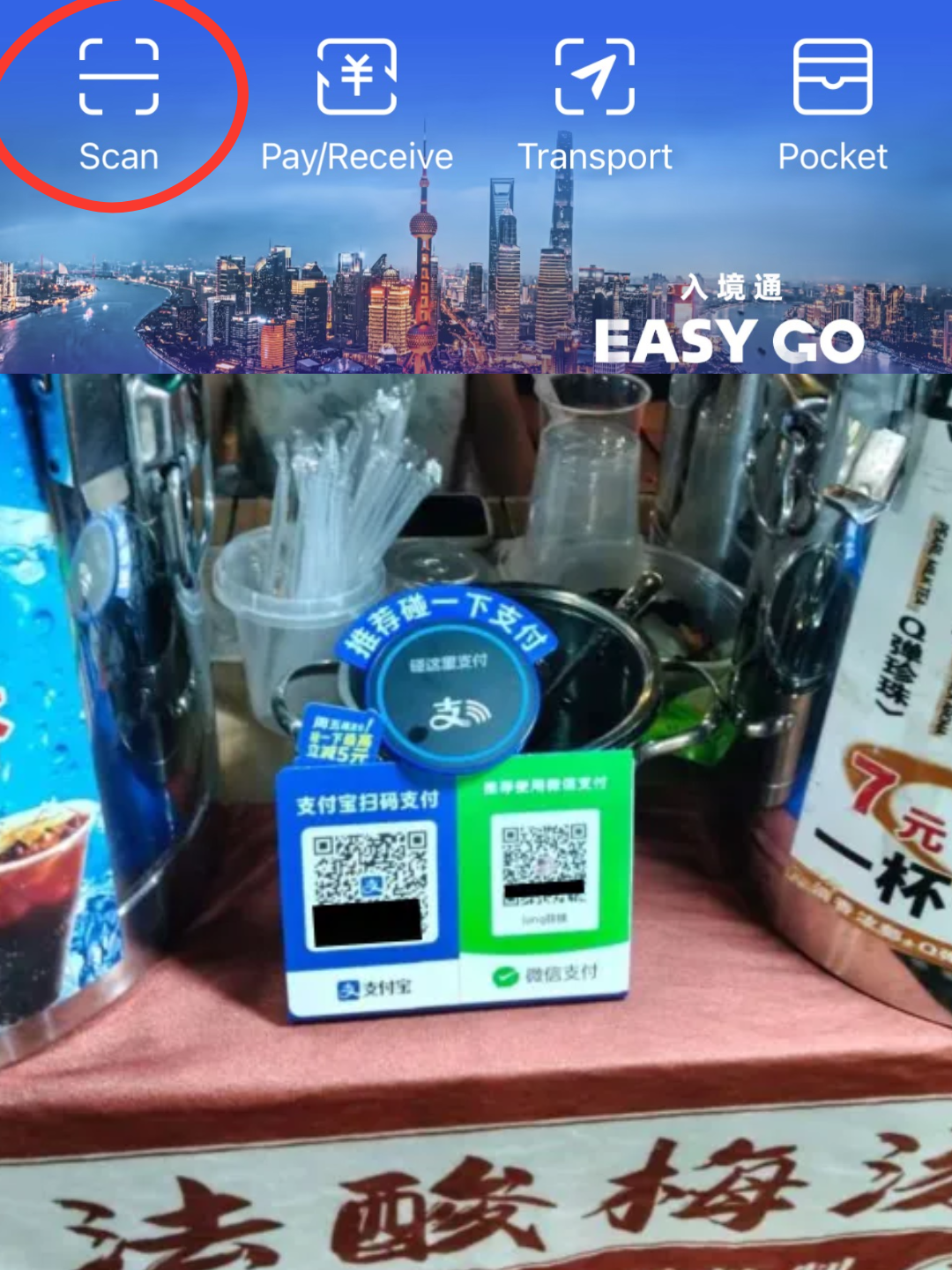
Scan to Pay

They Display, You Scan

The merchant displays a QR code, either at the counter, on the wall, or at your table. Open the Scan function in Alipay or WeChat Pay and point your camera at it.

You’ll see this a lot at smaller shops, street stalls, and restaurants. With a static QR code, you’ll usually need to enter the amount yourself, so double-check the number before confirming.
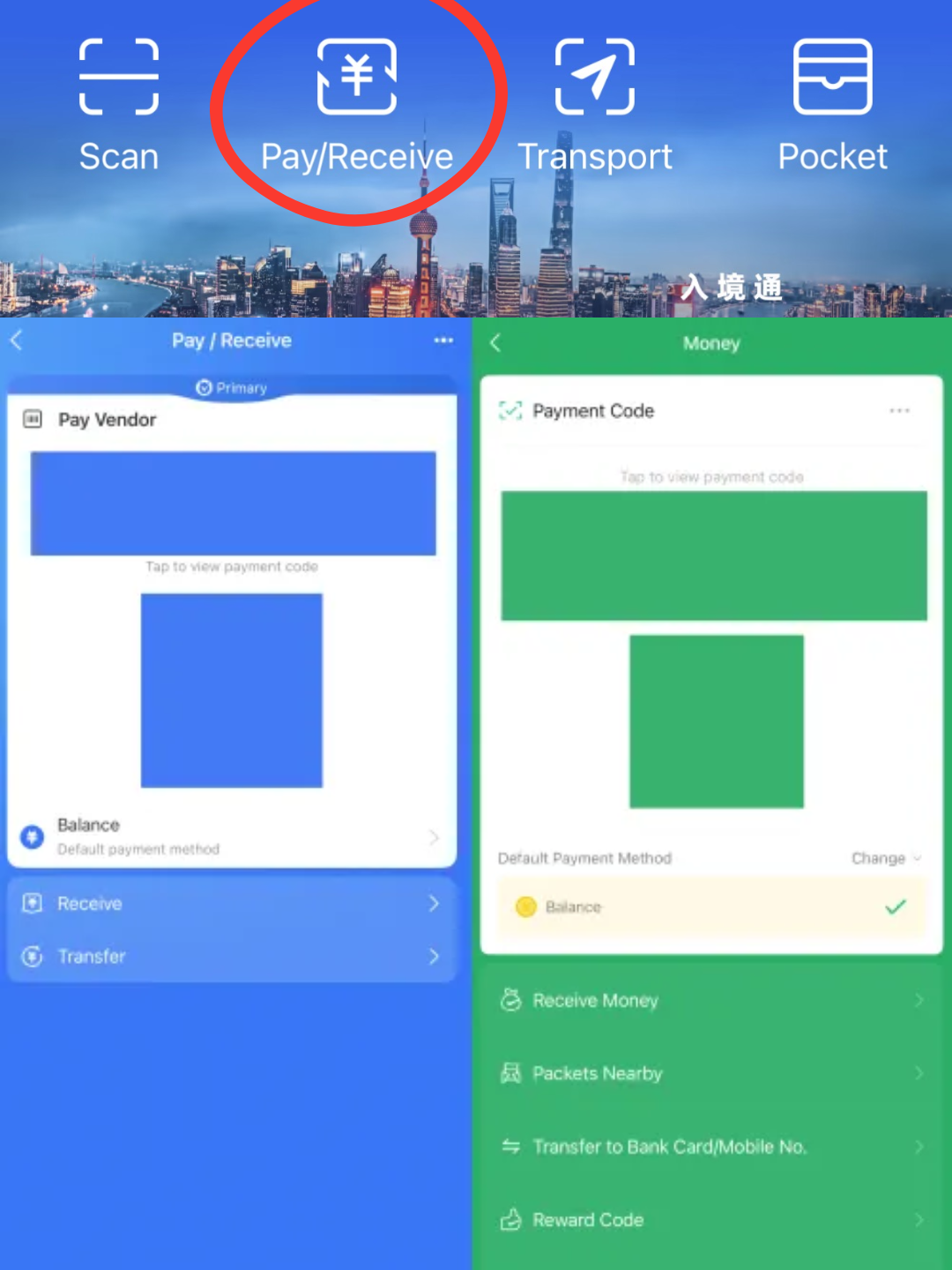
Show to Pay

You Display, They Scan

Open Alipay or WeChat Pay and bring up your payment code. The app generates a barcode or QR code that the merchant scans at checkout.

You’ll see this more often at convenience stores, supermarkets, chain restaurants, and staffed counters. The amount is usually entered for you, so you just need to confirm the payment with Face ID, fingerprint, or your payment password if prompted.

There are other ways to pay too, including tapping your phone or watch and even facial-recognition payments. But for most visitors, the two methods above are the ones you’ll see and use almost everywhere.

If you run into any issues with Alipay, don’t hesitate to contact customer service through the app. They’re usually pretty responsive, and the built-in translation makes it easy to get help in English. From our experience, they’re pretty reliable.